The short answer
In Belgium, you've arranged music rights for an event since 2020 via a single platform: Unisono, which combines copyright (Sabam) and the Fair Remuneration into one licence and one invoice. Two things determine what you actually pay: is the music recorded or live, and does your venue already have an annual licence covering music use.

The two types of rights, in plain language
Behind every song sit two groups of rights holders. Copyright remunerates whoever wrote the song: composers, lyricists and publishers. In Belgium, Sabam manages these rights. The Fair Remuneration remunerates whoever performed and recorded the song: the artists and producers of the recording (represented by PlayRight and SIMIM). Previously this required two separate declarations with two invoices; since 1 January 2020, Unisono bundles both into one licence and one payment.
The distinction that saves you money: live versus recorded
The Fair Remuneration applies exclusively to recorded music played in a publicly accessible space. A purely live performance — a string quartet, a jazz trio, a cover band playing themselves — falls outside this. Copyright, however, remains due once protected repertoire is heard, whether played live or recorded. Concretely for a typical party evening: if a band plays live and a DJ (or a break playlist) plays recorded music, both rights apply; if the evening is fully live and acoustic, the Fair Remuneration drops away. A clear explanation is also available at ikorganiseer.be, the Flemish knowledge centre for event organisers.
Who arranges it: you or the venue?
This is where things most often go wrong in practice — in both directions. Many function and event venues have an annual licence that already covers music use in their space; anyone who also declares themselves pays twice. Conversely: anyone who assumes "the venue handles that" when it doesn't risks a back-payment demand. The rule of three:
- Event at a venue? Ask the operator in writing what the annual licence covers; via MyUnisono you can check whether a venue is registered.
- Event outdoors or on your own grounds? As organiser, you almost always handle the declaration yourself via MyUnisono.
- Corporate event? The organiser bears responsibility — factor the declaration into your planning, as described in our complete guide for corporate events.
How and when do you declare?
The declaration runs online via MyUnisono and takes a few minutes; submit it well in advance — municipal event desks advise at least a few days before the event. The amount due depends on factors such as the size of the space, whether an entrance fee is charged, and the type of event; Unisono offers a price simulator to estimate this in advance. One exception: if you use exclusively public-domain or royalty-free music, no licence is needed — though the Fair Remuneration still applies once the recording used is itself still protected.
 Practical advice from Reinout
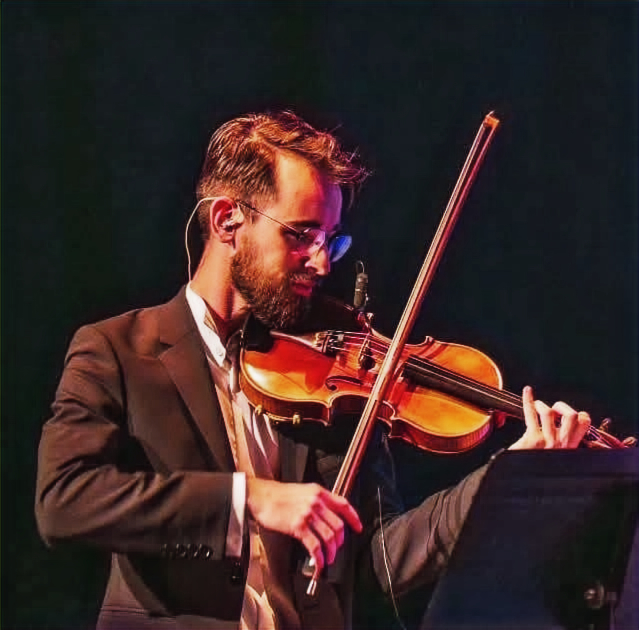
Ask your venue one written question: "Which music rights does your annual licence cover, and what do I still need to declare myself?" That one email prevents both double payment and a later back-payment demand — and the answer belongs in your event file, alongside the contract with the ensemble.
Three persistent misconceptions
- "The band handles that." No: declaring music use is the responsibility of the organiser or the venue, not the musicians. The ensemble plays; whoever organises the event does the declaration.
- "A private party surely doesn't count." Even at parties in hired venues, music use is generally remunerated — it's just that it usually runs through the venue's annual licence, so as a couple or celebrant you notice nothing of it. Checking remains the message.
- "I'm just playing my own playlist, so that's free." A self-compiled playlist consists of protected songs and protected recordings; precisely then both rights apply. Only fully royalty-free or public-domain material escapes it.
What does this mean for your budget?
For most private parties at a venue, music use is covered through the venue and nothing changes in your budget. If you're organising yourself — outdoors, on your own grounds, or as a company — factor the licence in as a separate line item alongside the fee, VAT and technique. The full overview of cost items organisers often overlook is in the hidden costs of live music; the price breakdown per ensemble in how much does music for a corporate event cost.
This guide is practical information, not legal advice. For the precise application to your situation, consult Unisono or your legal adviser.