The short answer
A good live music contract contains ten clauses: identity of both parties, date and venue, fee and payment, playing time, cancellation terms in both directions, force majeure and technical agreements. The most commonly forgotten clause: what happens if the ensemble cancels.

Why a contract is essential
Booking live music without a contract is a risk you never fully appreciate until it's too late. A band cancelling two weeks before your wedding with no compensation. A fee that ends up higher than agreed because "extra costs" were never fixed anywhere. An ensemble stopping an hour early because "the set was done."
All of these situations are avoidable with a well-drafted contract. Below are the ten clauses that should always be included.
1. Identity of both parties
Name, address and — for companies — company registration number, for both the client and the ensemble or agency. This seems obvious but is legally essential: without correct identification of both parties, a contract is hard to enforce.
2. Date, time and venue
The full date (day, month, year), the exact arrival time and the start and end time of the performance. The full address of the venue, including the name of the room or estate. An error in any of these details can cause confusion on the day itself.
3. Fee and payment terms
The agreed amount, excl. and incl. VAT. The VAT rate (6% for music performances in Belgium — the basis for that reduced rate is at Cultuurloket). The deposit: when to pay it, how much, and to which account number. The remaining balance: when to pay it (usually 14 days before the performance or on the day itself).
4. Playing time and set structure
How long does the ensemble play? One set or two? How long is any break? Who decides when the break happens? What plays during the break (background playlist or silence)? All of these belong in the contract.
5. Cancellation terms for the client
What if you need to cancel? A professional contract describes a sliding scale: the earlier you cancel, the lower the cancellation fee.
- More than 6 months before: refund of the deposit
- 3 to 6 months before: 25–50% of the fee
- Less than 3 months before: 50–75% of the fee
- Less than 1 month before: 75–100% of the fee
These are common percentages in the sector — your contract may vary.
6. Cancellation terms for the ensemble
What if the ensemble cancels? This is the clause many clients forget to ask about, but it's the most impactful. A professional contract determines: what compensation do you receive if the ensemble cancels, and is the ensemble obliged to find an equivalent alternative?
7. Force majeure clause
Force majeure — illness, death, extreme weather, pandemic — exempts both parties from liability. The clause determines what happens in the event of force majeure: refund of the deposit, postponement, or another arrangement.
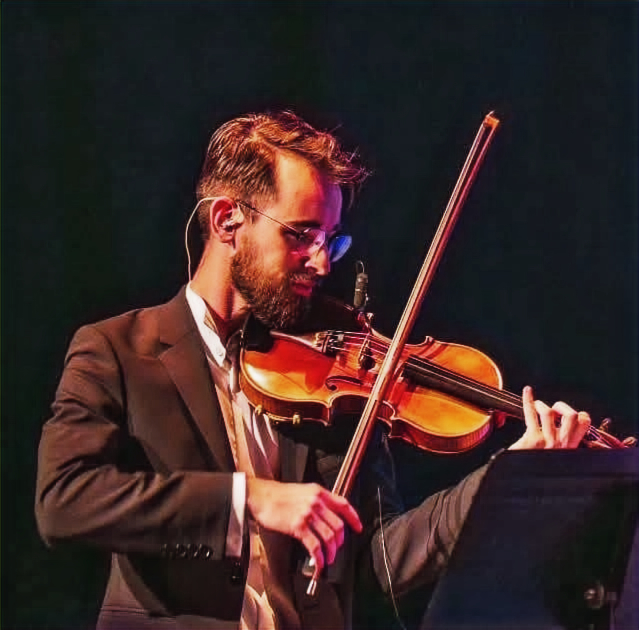
"A contract isn't meant for when everything goes right — it's meant for when something goes wrong. And in a sector where people are planning their most beautiful day or their most visible corporate event, 'something goes wrong' isn't a hypothetical situation. It happens every year to plenty of couples and event managers who relied on a verbal agreement." Reinout Pauwels — music consultant at De Muziekvitrine
8. Technical requirements and rider
The technical rider is an appendix to the contract describing the ensemble's technical requirements: power circuits, set-up space, PA specifications, dressing room needs. If the venue doesn't meet the rider and the performance can't go ahead as a result, the contract determines who's responsible.
9. Intellectual property rights
Who films or photographs the performance, and may that material be used publicly? For corporate events shared on social media or used in marketing communications, this is a relevant clause. Some ensembles require permission for the use of their name and likeness in your communications.
10. Governing law and competent court
In case of a dispute: which law applies and which court is competent? For Belgian events this is usually Belgian law and the court of the domicile of one of the parties. This clause only becomes relevant in a serious dispute — but then it's indispensable.
| Clause | Why essential |
|---|---|
| Identity of parties | Legal enforceability |
| Date and venue | Avoids misunderstandings on the day |
| Fee and VAT | No budget surprises |
| Playing time | Clarity on what you're buying |
| Client cancellation | Financial protection for the ensemble |
| Ensemble cancellation | Your protection as a client |
| Force majeure | Covers unforeseen situations |
| Technical rider | Avoids technical conflicts |
| Intellectual property | Relevant for corporate communications |
| Governing law | Safety net in a serious dispute |
Do you always work with a contract via De Muziekvitrine?
Yes, always. Every booking via De Muziekvitrine is covered by a professional contract containing all the clauses above. You don't need to draft or check anything yourself — we do that for you and provide you with a clear document you can review at leisure before signing.